
I am pleased to present this update on the work of the Helen Suzman Foundation during the first half of 2026.
Recent months have once again highlighted both the resilience of South Africa’s constitutional democracy and the persistent challenges facing its institutions. Following sustained advocacy and litigation by HSF and the Consortium for Refugees and Migrants in South Africa (CoRMSA), the long-awaited public consultations on the future of the Zimbabwean and Lesotho Exemption Permits were finally held. Unfortunately, these consultations took place against a backdrop of heightened xenophobia throughout the country.
Against this backdrop, the Foundation has remained actively engaged in advancing institutional accountability and constitutional reform. From our continued participation in the TRC Commission of Inquiry and advocacy for a stronger and more independent National Prosecuting Authority, to our litigation, submissions and monitoring of conditions within South Africa’s immigration detention system, our work reflects the breadth of challenges confronting our constitutional democracy.
This year has also marked an exciting period of growth for HSF. We were delighted to welcome two new researchers, Ipeleng Motuba and Vuyani Ndzishe, whose contributions have strengthened our capacity to pursue an increasingly ambitious programme of work.
As we enter the second half of 2026, we remain committed to confronting emerging constitutional challenges, holding public institutions accountable and contributing constructively to the development of a more just, transparent and responsive democracy.
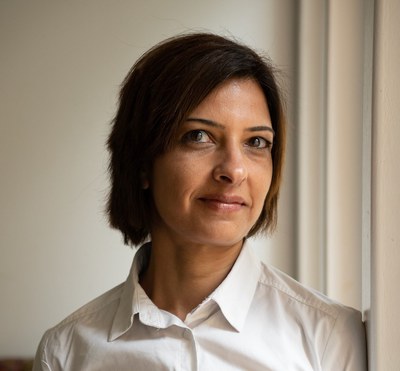 Naseema Fakir
Litigation Update
Helen Suzman Foundation v Speaker of the National Assembly and Others (2026/109517)
After several rounds of correspondence with the Speaker of the National Assembly since 2025, HSF launched proceedings in the Western Cape High Court seeking to compel the National Assembly to assess whether Julius Malema, leader of the Economic Freedom Fighters (EFF), remains fit to serve as its representative on the Judicial Service Commission (JSC).
HSF argues that Parliament is under a binding obligation to review Malema’s membership following his firearm-related criminal conviction and five-year sentence. Additional grounds for the application include Malema’s history of public attacks on judicial officers, previous findings of hate speech and an adversarial interview style that HSF argues has, at times, crossed the line into political bullying. Importantly, HSF does not ask the Court to remove Malema from the JSC directly. Rather, it seeks an order requiring the National Assembly to fulfil its oversight responsibilities and assess his continued fitness to serve on a body central to safeguarding judicial independence.
The application further challenges the absence of a code of conduct for JSC commissioners and seeks relief aimed at addressing this deficiency in the legislative framework governing the JSC, thereby strengthening the integrity and accountability of future Commissioners.
HSF Admitted as Amicus Curiae in Rorich v The State and Mfalapitsa (1173/2025)
On 28 May 2026, HSF was admitted as amicus curiae in the Supreme Court of Appeal matter of Rorich v The State and Mfalapitsa. The matter concerns the prosecution of two individuals charged with Apartheid-era crimes against humanity arising from the deaths of the COSAS 4 in 1982. The appeal follows a 2025 High Court judgment dismissing an objection that the prosecution had prescribed because more than 20 years had passed since the alleged offences were committed. The High Court held that the prosecution could proceed on the basis that crimes against humanity are recognised under customary international law and incorporated into South African law through section 232 of the Constitution.
In its submissions before the SCA, HSF will argue, among other things, that South Africa must uphold its international law obligations and should not become a safe haven for alleged perpetrators of crimes against humanity merely because of the passage of time.
Operation Dudula v Minister of Home Affairs and Others (2026/066638)
In March 2026, Operation Dudula instituted proceedings in the Pretoria High Court against the Minister of Home Affairs, the Director-General of Home Affairs, HSF, CoRMSA, the Zimbabwe Immigration Federation NPC (ZIF), and African Amity NPC.
The application challenges the Minister’s October 2025 decision to extend the validity of ZEPs until May 2027. Operation Dudula argues that the Minister lacked the legislative authority to extend the permits after 6 November 2024, when it contends that the 12-month period of interim relief granted in the 2023 HSF judgment expired.
On this basis, Operation Dudula argues that no valid ZEPs existed for the Minister subsequently to extend and seeks an order declaring the Minister’s decision unlawful and setting it aside. The application further seeks an order requiring ZEP holders to regularise their status under South Africa’s immigration laws within six months.
Arguments Presented in The Children’s Institute and Others v Minister of Home Affairs (2024/148658)
After being admitted as amicus curiae in November 2025, HSF participated in proceedings brought by the Children’s Institute concerning delays in the processing of late registration of birth applications by the Department of Home Affairs.The matter was heard on 11 June 2026. HSF argued that the Court must consider the profound consequences that the absence of a birth certificate can have on a child, particularly where the child bears no responsibility for their lack of documentation and the resulting harm is beyond their control.
The Department disputed the existence of a backlog and challenged claims that approximately 258,000 children and young adults remained undocumented despite having submitted applications.
The parties are currently awaiting the Court’s determination of the dispute of fact before the matter can proceed towards final judgment.
Judicial Commission of Inquiry into Alleged Interference in TRC Cases
The TRC Inquiry, which commenced in November 2025, continued to hear evidence relating to its mandate to investigate alleged efforts or attempts to interfere with the investigation and prosecution of TRC cases.
While HSF awaits the opportunity to present oral submissions before the Commission, former Presidents Thabo Mbeki and Jacob Zuma instituted proceedings concerning applications for the recusal of the Commission’s Chairperson, former Justice Sisi Khampepe.
An application was brought before the Johannesburg High Court seeking to review and set aside the dismissal of the recusal application and to remove Justice Khampepe as Chairperson of the Commission. On 30 March 2026, the High Court dismissed the application on procedural grounds, finding that the applicants had failed to obtain the consent required under section 47 of the Superior Courts Act before instituting proceedings against a retired judge.
Following the High Court’s decision, an urgent application was launched seeking leave to appeal directly to the Constitutional Court. The applicants seek to overturn the High Court’s judgment or, alternatively, to have the matter remitted to the High Court for determination. The matter was heard at the end of June 2026 and judgment is pending.
Advocacy
Letter to the President on the NPA
In March 2026, HSF wrote to President Cyril Ramaphosa calling for urgent action to strengthen the independence of the National Prosecuting Authority (NPA). HSF highlighted the delay in implementing the President’s 2022 undertaking, following the recommendations of the Zondo Commission, to clarify the Minister of Justice’s “final responsibility” over the NPA and address the institution’s financial and administrative independence. HSF called on the President to resolve the apparent impasse between the Presidency and the Department of Justice and to amend the NPA Act to ensure that the Minister’s powers cannot undermine the NPA’s constitutional obligation to exercise its functions without fear, favour or prejudice.
HSF continues to await a response from the Presidency.
Concerns over SANDF Deployment
In March 2026, HSF raised concerns regarding procedural non-compliance in the deployment of the South African National Defence Force (SANDF) in support of the police in Gauteng after an announcement made by President Ramaphosa during the State of the Nation address. These concerns included the failure to publish the required notice of deployment in the Government Gazette within the timeframe prescribed by the Defence Act. HSF subsequently wrote to the Joint Standing Committee on Defence (JSCD), calling on it to exercise its parliamentary oversight powers and ensure compliance with the applicable legal framework. HSF also requested clarity on whether an appropriate Code of Conduct governing the deployment had been approved. Following HSF’s intervention, the Committee raised these concerns with the Minister of Defence and the SANDF during a parliamentary briefing. The SANDF subsequently undertook to publish the Code of Conduct, while the Minister published a Gazette notice relating to one of the deployments.
While HSF welcomed these developments, questions remained regarding compliance with the prescribed timeframes and an earlier deployment for which no corresponding Gazette notice had been published. HSF therefore reiterated the importance of transparency, civilian oversight and accountability in the deployment of the SANDF in support of the police.
Advocacy for ZEP Holders
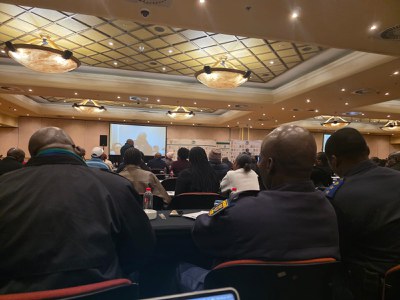 As of May 2026, Minister Leon Schreiber and the Department of Home Affairs (DHA) had yet to comply fully with the June 2023 court order requiring meaningful consultation with stakeholders affected by the potential termination of the Zimbabwean Exemption Permit (ZEP) and Lesotho Exemption Permit (LEP) programmes. The continued uncertainty surrounding the future of these permits has contributed to broader debate concerning migration in South Africa.
The consultation process commenced in the Eastern Cape on 13 May and concluded in Gauteng on 18 June 2026. However, concerns arose regarding the quality of information-sharing and public participation throughout the process, creating the impression that the consultations were conducted primarily as a “tick-box” exercise to fulfil the DHA’s obligations under the court order.
HSF attended the Mpumalanga and Gauteng consultations in person, where the affected community was repeatedly subjected to hostility and xenophobic sentiment. The consultations were intended to provide stakeholders with an opportunity to make submissions on issues including the possible regularisation of ZEP and LEP holders and the potential impact of such measures on South African society.
The final report arising from the consultation process is expected to be released for consideration in or around October 2026. However, the DHA’s purported “structured plan” for meaningful consultation was undermined by administrative shortcomings, including late notice and inadequate communication. HSF, for example, received a formal invitation to participate only on 11 May 2026, after the Free State consultation had already taken place. In response, HSF developed a survey to enable stakeholders to record their experiences of the consultation process and received over 2500 responses.
To date, ZEP and LEP holders remain in a state of uncertainty regarding their future legal status in South Africa. This uncertainty is compounded by ongoing administrative backlogs within the DHA and Visa Facilitation Services (VFS) centres across the country.
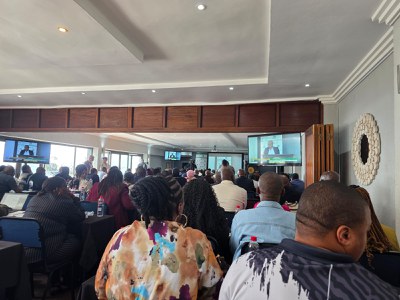
HSF attended all (except Free State) of the consultations online, as well as Mpumalanga and Gauteng consultations in person, to observe the public participation process, policy development procedures and related constitutional concerns. Following the conclusion of the consultations in June 2026, HSF submitted comments to the DHA on 30 June 2026.
The submission does not advocate for a particular outcome regarding the future of the ZEP or LEP programmes. Rather, it identifies considerations relevant to ensuring that any future decision is lawful, rational and procedurally fair.
Lindela Visit with the SAHRC and UNHCR
HSF conducted a monitoring visit to the Lindela Repatriation Centre alongside the South African Human Rights Commission (SAHRC) and the United Nations High Commissioner for Refugees (UNHCR) to assess the treatment and transfer of immigration detainees against minimum constitutional standards. The visit identified significant administrative challenges, including a nationwide shortage of immigration officers, delays in transferring detainees and documentation from police stations and correctional facilities, and fragmented information-management systems. Concerns were also raised regarding conditions in SAPS holding cells, where overcrowding and the inability to separate immigration detainees from criminal detainees remain persistent challenges. At Lindela, gaps in healthcare and legal services include limitations on the provision of antiretroviral treatment, failures to transfer detainees’ chronic medication, and the absence of internal interpreters, which can contribute to prolonged periods of detention. HSF’s findings highlight the need to address systemic shortcomings throughout South Africa’s immigration detention and deportation processes to ensure greater accountability and protection of detainees’ constitutional rights.
Submissions
Amendment to the Code of Ethical Conduct and Disclosure of Members’ Interests
HSF submitted recommendations calling on Parliament to strengthen its accountability framework by explicitly extending the Code of Ethical Conduct to Members of Parliament serving on external constitutional and statutory bodies. HSF further called for stronger mechanisms to ensure that sanctions imposed by the Ethics Committee are implemented promptly once available legal appeal processes have been exhausted. These reforms would strengthen institutional accountability and promote public confidence in Parliament and other democratic institutions.
Protected Disclosures Draft Bill, 2026
In May 2026, HSF submitted comments on the Draft Protected Disclosures Bill, welcoming the proposed reforms while highlighting the structural and practical challenges that continue to confront whistleblowers in South Africa. HSF called for clearer disclosure procedures, stronger confidentiality and physical protection measures, broader access to legal, financial and psychosocial support, and safeguards governing the proposed central database for disclosures. The submission further recommended establishing an independent Office of the Whistleblower to provide dedicated support, guidance and oversight.
HSF and KAAX Comments on the Draft White Paper on Citizenship, Immigration and Refugee Protection
Together with Kopanang Africa Against Xenophobia (KAAX), HSF submitted comments calling for the withdrawal of the 2025 Draft White Paper on Citizenship, Immigration and Refugee Protection, arguing that several of its proposals are inconsistent with international law, the Constitution and fundamental human rights. While welcoming the removal of the proposal to withdraw South Africa from the 1951 Refugee Convention, the submission raised concerns regarding the “first safe country” principle, the rights of stateless children, persistent DHA backlogs and barriers to late birth registration. HSF and KAAX also highlighted the risks of criminalising rural and remote communities with limited access to DHA services and introducing artificial intelligence without an adequate regulatory framework.
Prevention of Illegal Eviction from and Unlawful Occupation of Land (PIE) Amendment Bill
HSF submitted comments on the draft PIE Amendment Bill, warning that several provisions risk undermining established constitutional protections and jurisprudence developed under section 26 of the Constitution. The submission raised particular concerns regarding proposals that could weaken municipal obligations to provide emergency alternative accommodation and restrict judicial discretion in determining whether an eviction is “just and equitable”. While welcoming the earlier involvement of organs of state in eviction proceedings, HSF called for the Bill to be reconsidered to ensure that administrative efficiency is not prioritised at the expense of human rights and constitutional compliance.
SALRC Discussion Paper 169 on Mental and Intellectual Disability and the Criminal Justice System
HSF submitted comments on SALRC Discussion Paper 169 calling for a human-rights-centred approach to the treatment of people with mental and intellectual disabilities within the criminal justice system. The submission highlighted data-sharing and communication failures between courts, hospitals and correctional facilities that can contribute to unconstitutionally prolonged detention. HSF also called for stronger mechanisms to ensure that victims are consulted in decisions concerning the release or institutional placement of state patients.
SALRC Discussion Paper 170 on the Protection of the Rights of Victims of Crime in Criminal Proceedings
HSF submitted comments on SALRC Discussion Paper 170, welcoming efforts to strengthen victims’ rights while highlighting significant gaps in the protection of particularly vulnerable categories of victims, including victims of crimes committed by state patients. The submission called for enforceable statutory rights within the Criminal Procedure Act to ensure victim protection, regular communication and meaningful participation throughout criminal proceedings. HSF argued that these reforms are necessary to reduce secondary victimisation and strengthen the position of victims within the criminal justice system.
SALRC Discussion Paper 173 on Strengthening Governance and Accountability Mechanisms in the Criminal Justice System
HSF’s submission on the SALRC Discussion Paper 173 emphasised the need for credible and integrated information systems, improved coordination between state institutions and the elimination of institutional duplication. HSF further called for objective, merit-based appointment criteria and stronger safeguards to protect law enforcement leadership from political interference.
SALRC Discussion Paper 174 on the Right to a Fair Trial: The Need to Obviate Delays
HSF submitted comments on SALRC Discussion Paper 174, highlighting the threat that systemic delays and court backlogs pose to the rights of accused persons, access to justice for victims and public confidence in the criminal justice system. The submission supported measures to prevent the abuse of legal processes through so-called “Stalingrad tactics” and called for clearer legislative timelines and stronger statutory case-management powers for judicial officers. HSF argued that these reforms would improve judicial efficiency and strengthen the administration of justice.
SALRC Discussion Paper 175: Review of Laws Pertaining to Evidence in Criminal Proceedings
For SALRC Discussion Paper 175, HSF’s submission emphasised the need for clearer legislative standards capable of responding to developments in digital technology and modern litigation while protecting the constitutional rights of accused persons and victims. HSF argued that a more coherent statutory framework would improve legal certainty and strengthen public confidence in criminal proceedings.
Events
Webinar: Twenty-One Years After the Jali Commission – Why Overcrowding Still Plagues South Africa’s Correctional Centres
Despite the recommendations of the Jali Commission of Inquiry into alleged incidents of corruption, maladministration, violence and intimidation within the Department of Correctional Services, South Africa continues to face persistent challenges relating to overcrowding in correctional facilities.
On 20 January 2026, HSF hosted a webinar featuring Judge Lee Bozalek, Inspecting Judge for Correctional Services; Professor TD Matshaba of the Department of Corrections Management at UNISA; and Doreen Gaura of Just Detention International. The discussion examined the persistence of overcrowding and considered measures necessary to address the crisis.
Watch the webinar here:
https://www.youtube.com/watch?v=gFocpdpNAME&t=71s
Webinar: Protecting the Bench – Why JSC Reform is Essential to Prevent Judicial Capture
As the Madlanga Commission continues to reveal the extent to which elements of the South African Police Service have allegedly been captured by criminal interests, the importance of protecting the integrity and independence of the judiciary remains paramount.
On 19 February 2026, HSF hosted a webinar featuring Alison Tilley of Judges Matter, Lawson Naidoo of CASAC and Chris Oxtoby of Freedom Under Law. The discussion considered how reform of the JSC could strengthen safeguards against judicial capture and ensure that the judiciary retains its integrity and independence.
Watch the webinar here:
https://www.youtube.com/watch?v=lH8XyByx86I
Constitution Hill Human Rights Festival 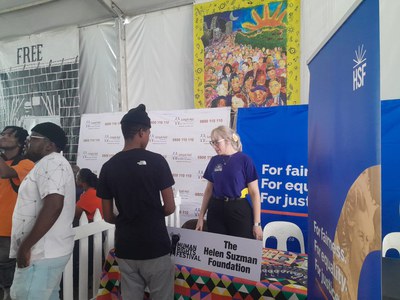
HSF participated in a panel discussion at the annual Constitution Hill Human Rights Festival in Johannesburg from 26 – 29 March. Moderated by the Legal Resources Centre, the session examined the successes and shortcomings of public commissions of inquiry, with particular reference to the Zondo Commission of Inquiry into State Capture.
HSF Executive Director Naseema Fakir participated alongside former public interest lawyer Dan Mafora and legal professional Nkululeko Conco. The discussion explored the risks, limitations and implementation challenges associated with commissions of inquiry, as well as the increasing judicialisation of commissions.
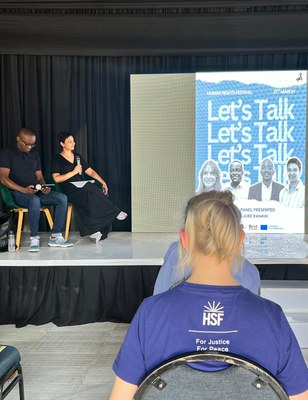 The panel also considered the nature and purpose of commissions, how they differ from courts of law and parliamentary committees, and their evolution from pre-constitutional truth-seeking mechanisms to contemporary instruments of public accountability.
Judicial Service Commission April Interviews
From 13 to 17 April 2026, HSF attended the Judicial Service Commission (JSC) interviews to observe the proceedings, with particular attention to the interview of Judge Aubrey Ledwaba for appointment as Judge President of the Gauteng Division of the High Court. HSF made a submission to the JSC following allegations raised during testimony before the Madlanga Commission. While acknowledging that the allegations remain untested and that no formal complaint has been lodged against Judge Ledwaba, HSF argued that proceeding with his appointment before he has had an opportunity to respond to the allegations, and before the Commission has concluded its work, could undermine public confidence in the integrity of the judiciary.
Civil Society Working Group on State Capture
On 4 June 2026, HSF attended a workshop hosted by the Civil Society Working Group on State Capture concerning the National Anti-Corruption Advisory Council’s proposals for South Africa’s future anti-corruption architecture.
Participants discussed the implications of the President’s failure to respond to calls for stronger measures to protect whistleblowers. Civil society organisations engaged in discussions concerning legislative and procedural reforms, including proposals to strengthen protective mechanisms by providing whistleblowers with access to urgent relief, protection orders and safeguards against retaliation.
Further discussions considered whether retaliation against whistleblowers should be criminalised and the potential implications of such reforms for existing protections under the Labour Relations Act.
The workshop concluded with the drafting of a follow-up letter to the President calling for a response to civil society’s proposals within 90 days of receipt.
Read more here:
https://hsf.org.za/news/media-statement-civil-society-calls-for-strengthening-south-africa2019s-anti-corruption-architecture
Public Consultation on the Prosecution Project
On 4 and 5 June 2026, HSF participated in public consultations hosted by the Dullah Omar Institute’s Prosecution Project on potential reforms to strengthen the independence, accountability and effectiveness of the NPA.
Discussions focused on the appointment and removal of senior NPA leadership, financial and institutional independence, prosecutorial skills and capacity, and the need for stronger mechanisms to promote transparency and accountability.
The outcomes of consultations held across the country will inform proposals for amendments to the NPA Act aimed at strengthening the independence of the prosecuting authority.
South African Human Rights Commission and Civil Society Imbizo on Migration-Related Tensions and the 30 June 2026 Deadline
In response to widespread public anxiety surrounding the 30 June 2026 deadline announced by anti-migrant groups, the SAHRC convened an emergency virtual imbizo to coordinate response eorts with civil society organisations, community leaders, and members of the public. HSF participated alongside organisations working across migration, criminal justice and human rights sectors. The SAHRC undertook to engage with relevant government departments on concerns aecting migrant communities and to continue efforts to address the broader issues driving xenophobia in South Africa.
HSF in the Media
HSF Staff Op-Eds
‘Public trust is being eroded while NPA reform promises gather dust’
‘War is Peace: When soldiers become a familiar sight on our streets, democracy itself is at risk.’
Mentions in the Media
‘Helen Suzman Foundation challenges EFF leader Julius Malema's participation in JSC ‘
Cyril Ramaphosa's accountability crisis: Unfulfilled promises and the fight against corruption